
Pouring art is a method of creating art by pouring paint that has been thinned to a flowing consistency onto a canvas or other surface, allowing the spreading colors to overlap and form patterns. This article covers fluid art, or acrylic pouring, using fluid acrylic paints. By changing where you first place the colors, the direction in which you tilt the canvas, and when you stop the flow, you can create different images using the same colors.
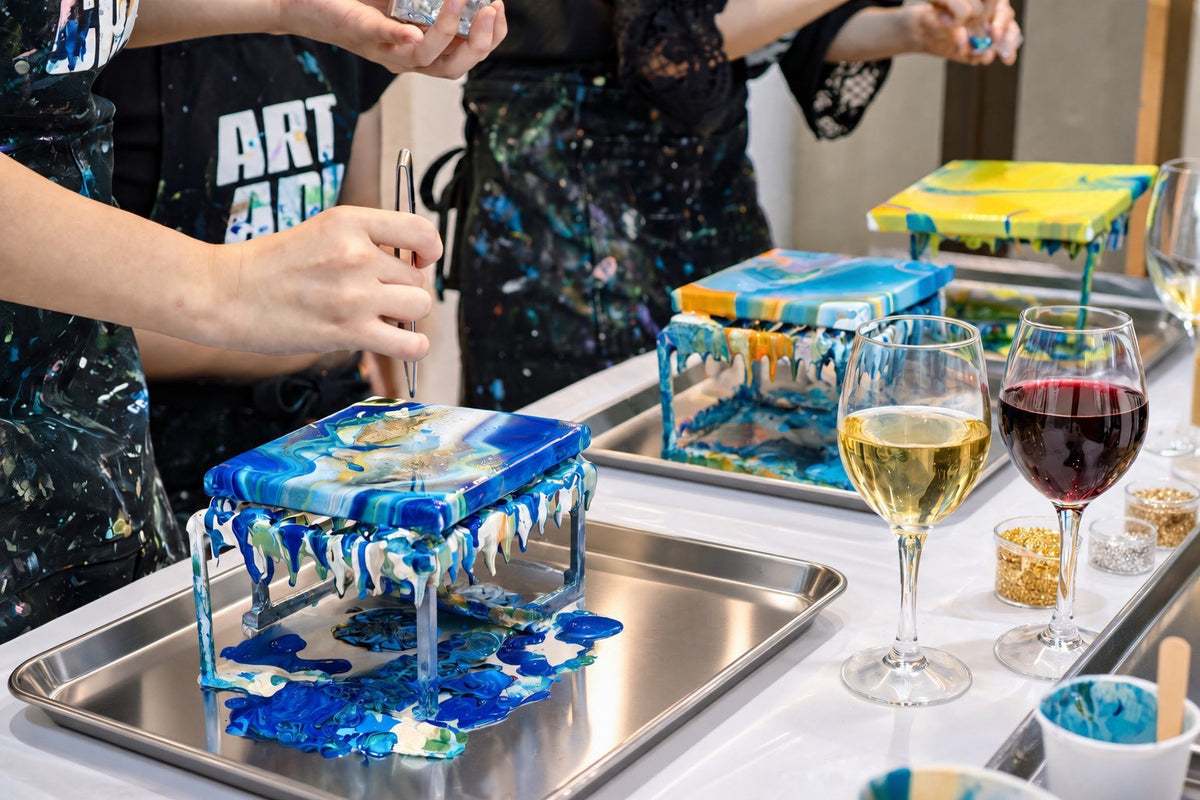
How do you make paint that flows?
By adding a pouring medium to acrylic paint, you can adjust the flow and the finish of the dried surface depending on the product you use. A medium is a material mixed with paint to change its properties. Check the container and manufacturer's instructions for the correct paint-to-medium ratio. If you use colors with different flow properties together, one color may move faster while another remains in place. Start by preparing small amounts of two colors separately and dropping them onto a scrap piece to compare how they spread.
Placing two colors side by side makes the boundary easier to see
When using blue and white, prepare them in separate containers and place a thin line of blue slightly away from the center of a small board. Place a thin line of white next to it, then gently tilt the board so the two colors come close together. Watch the moment the white touches the edge of the blue extending to the right. In a single image, you may see areas where the boundary between blue and white remains distinct alongside areas where it blends into a pale blue.
Using the tilt of the canvas to direct the patterns
Flowing paint moves toward the lower part of the tilted surface. Tilting it steeply from the beginning allows the colors to reach the edge quickly, making it difficult to see the changes as they occur. Raise one side slightly above the tray and first observe whether the tips of the colors move. Once the flow has started, return the surface to a level position before the patterns you want to keep move too far from the center. The paint may still move slightly after returning it to level, so observe it before tilting it in the next direction.
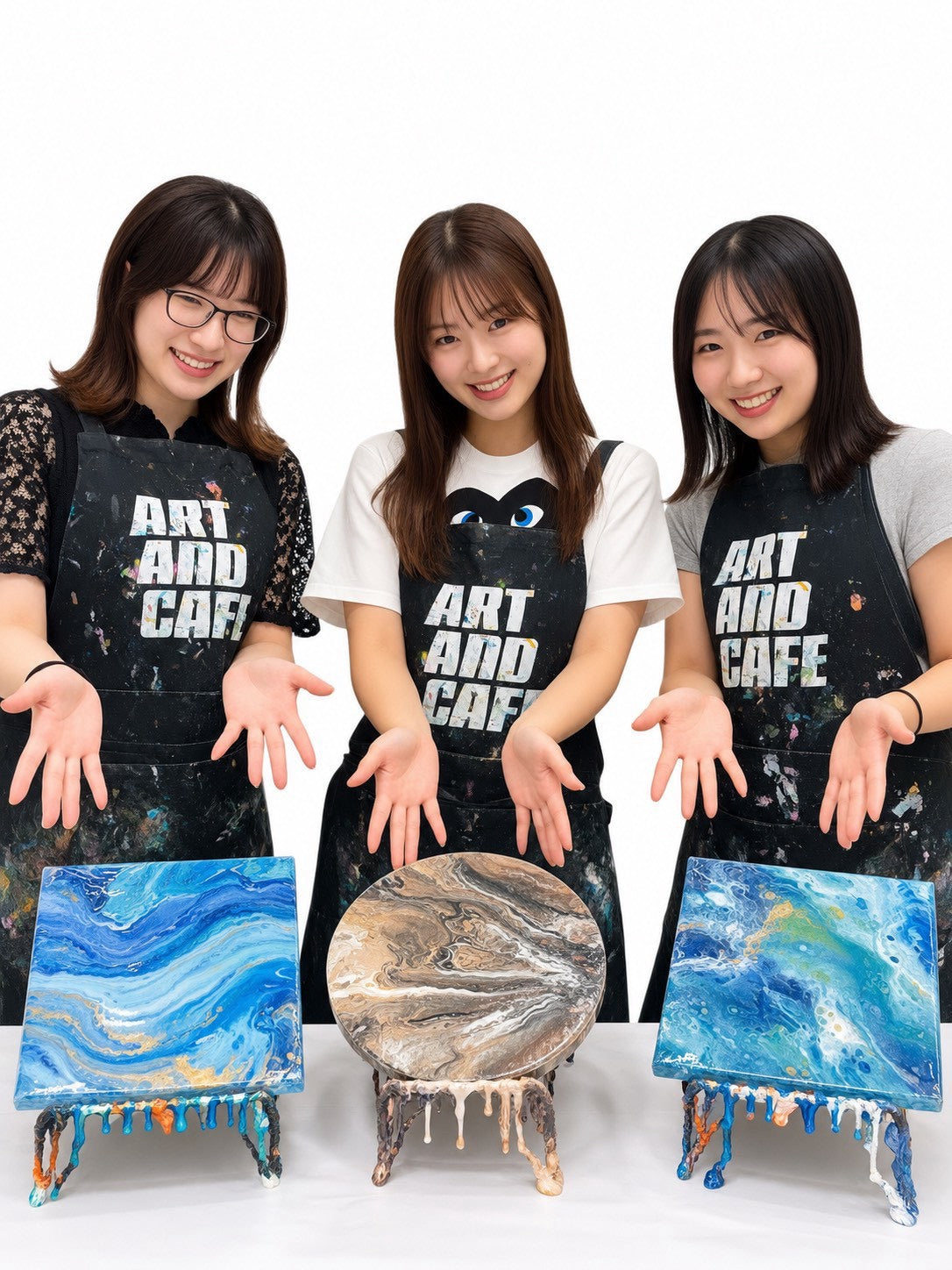
Tilting once to the right versus changing direction halfway
Place equal amounts of two colors in the same position on two small boards. For the first board, tilt it to the right, then return it to level once the colors begin to spread. For the second board, tilt it to the right, return it to level, and then tilt it toward you. Taking a photo from directly above before it dries allows you to compare the nearly straight lines with the lines that changed direction. Noting the direction of the tilt and the color that remained most prominently will make it easier to decide what kind of movement you want to recreate in your actual work.
If you would like to try choosing colors with an instructor, you can check the available weekday and weekend/holiday time slots on the product reservation page for the pouring art experience at ART AND CAFE Shibuya.
Decide where you want to keep the colors before pouring
During the process, you may try to cover all the white areas and end up losing a pattern you liked over the edge. Before pouring, decide on one area where you want to concentrate the colors and one area where you want fewer colors. Looking at the image from a little further away makes it easier to judge whether there is not enough color or whether the area with fewer colors is enhancing the other patterns. Before adding more color, observe the relationship between the colors remaining on the image rather than the paint that has fallen into the tray.

Common questions for your first time with pouring art
Why do the colors become muddy if mixed too much?
When paints are mixed together, the overlapping effects of the light absorbed by each pigment can reduce their vibrancy. To preserve bands of the original colors, prepare the colors separately and let them meet on the artwork. Using a small amount of dark color makes it easier to see where it has passed through. For your first time, rather than increasing the number of colors, try changing the amount or spacing of the same two colors and learn their differences, which will be useful for your next project.
Are round, bubble-like patterns always created?
The appearance of round patterns depends on the properties of the paint and medium, the pouring method, and other factors. First, observe the lines and boundaries of the colors, and if round patterns appear, record which color they appear in and how large they are. Make a note of the colors you used and the order in which you used them so you can review the working conditions.
When can I move it?
Once finished, place it on a stable, level surface and let it dry according to the instructions on the art supplies. Even if the surface appears dry, areas with thick paint may still be soft. Please check the instructions on the product reservation page for how to receive or take home your work from the experience.
Once dry, shift your gaze from the edge back to the center
Once the finished artwork is in a position where it can be viewed upright, first look for the edge where the colors flowed out. From there, trace the thickest line back toward the center to see where the direction changed and where the two colors met. Compare it with the photos you took during the process, and mark any areas where the shape changed after drying. If you want to preserve the same lines in your next piece, narrow down the conditions you will change to either the amount of color or the direction of the tilt to just one. Simply changing the direction can significantly alter the pattern, and you can find differences just by repeatedly using the same two colors.
Reference materials and related articles
GOLDEN Artist Colors|12 Color Pouring Tips
No. 4 What Is Color・No. 5 Differences Between Watercolor, Oil, and Acrylic・No. 6 What Is Abstract Art
ART AND CAFE Shibuya|Available Slots and Reservations for the Pouring Art Experience